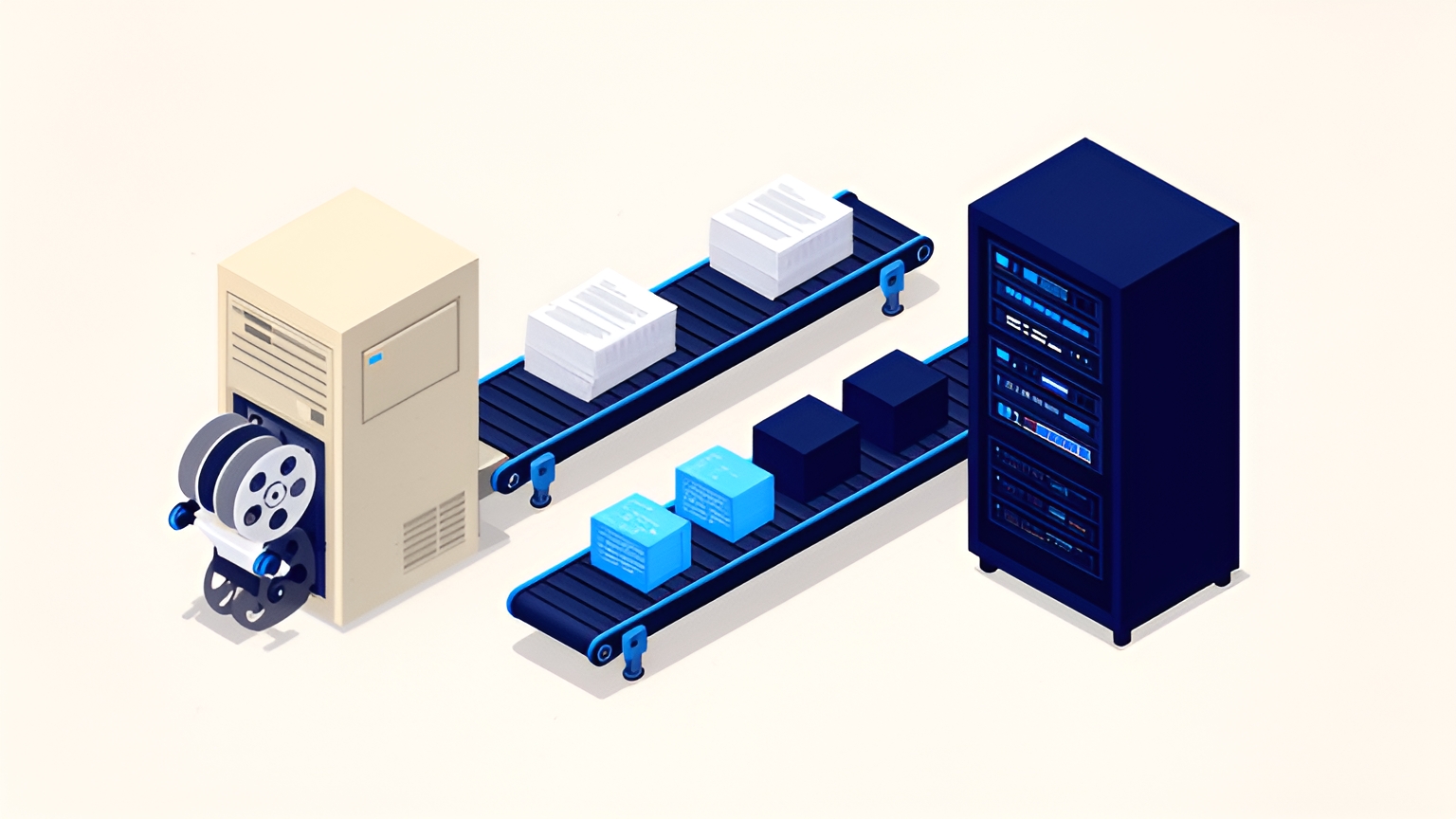
On September 29, Cognition announced Devin for MongoDB Modernizations, a joint offering with MongoDB that pairs Devin’s code transformation with MongoDB AMP’s data migration tooling. The pitch: Devin handles the legacy code rewrite (swapping out SQL queries, updating ORM calls, refactoring business logic), while MongoDB’s Application Modernization Platform (AMP) handles the data migration, validation, and schema transformation.
The target customer is enterprises running modernization projects — moving off Oracle, SQL Server, or mainframe databases to MongoDB Atlas. These projects typically involve two parallel workstreams: a code rewrite team and a data migration team. The code team updates application logic to work with MongoDB’s document model. The data team exports legacy data, transforms it, and validates it against the new schema. The two teams coordinate via spreadsheets and Slack threads.
Devin for MongoDB Modernizations aims to automate that coordination — and speed up both sides of the migration.
How it works: code and data in lockstep
MongoDB AMP is a managed service that handles database migration: you point it at your legacy Oracle or SQL Server instance, define a target schema in MongoDB, and AMP handles the export, transformation, and validation. It also runs dual-write during cutover — your application writes to both the old database and MongoDB simultaneously, letting you verify data consistency before you flip the switch.
Devin integrates with AMP at three points in the workflow:
-
Schema translation: Devin reads your legacy SQL schema and proposes a MongoDB document model, accounting for relational joins that need to be denormalized, foreign keys that become embedded arrays, and stored procedures that need to be rewritten as application logic.
-
Code transformation: Devin rewrites the application code to use MongoDB’s query language instead of SQL. For a typical enterprise app, that might mean converting 5,000–10,000 SQL queries, updating ORM configurations (e.g., Hibernate to Spring Data MongoDB), and refactoring transaction logic (since MongoDB’s transaction semantics differ from Oracle’s).
-
Validation: During AMP’s dual-write phase, Devin generates test cases that compare results from both databases, flagging discrepancies (e.g., a SQL
LEFT JOINthat got denormalized incorrectly, or a MongoDB aggregation pipeline that returns different results than the original SQL).
The outcome is that code and data stay in sync throughout the migration. When AMP finishes moving data, the application code is already updated, tested, and ready to deploy against the new database.
The market timing: modernization is accelerating
MongoDB’s AMP launched in 2025 as part of MongoDB Atlas. According to MongoDB’s Q2 2026 earnings call, AMP has been used in over 1,200 modernization projects to date, with the majority targeting Oracle-to-MongoDB and SQL-Server-to-MongoDB migrations. The average project size is 500,000–2 million lines of code, and the median time from kickoff to production cutover is 9–12 months.
Cognition’s announcement frames Devin as a way to cut that timeline. By automating the code transformation (historically 60–70% of the project timeline, per MongoDB’s estimates), customers can “reach production faster, freeing engineers to build great software and solve hard problems,” per Cognition’s post.
The timing aligns with a broader trend: enterprises that delayed modernization during the 2024–2025 recession are now restarting those projects, driven by Oracle license renewals (which jumped 15–20% in 2026, per Gartner) and end-of-support deadlines for legacy databases like SQL Server 2019 (extended support ends 2029). MongoDB’s customer pipeline for AMP is at an all-time high, per CEO Dev Ittycheria’s remarks on the Q2 2026 earnings call.
The competitive landscape: who else automates legacy migrations?
Cognition isn’t the first to automate legacy code rewrites, but it’s the first to integrate that automation with a database vendor’s migration tooling. Competitors in the space include:
- AWS Database Migration Service (DMS) — handles data migration, but doesn’t touch application code. You still need to rewrite queries manually.
- Google Cloud Database Migration Service — similar to AWS DMS; data migration only.
- Striim — real-time data replication and ETL, but no code transformation.
- GitHub Copilot and Cursor — can suggest SQL-to-MongoDB query rewrites one at a time, but don’t handle full-application migrations or coordinate with data migration tools.
Devin for MongoDB Modernizations is the first integrated stack that automates both sides — code and data — and keeps them synchronized throughout the project. That’s a differentiation point for enterprises that have tried DIY migrations and gotten stuck at cutover.
Method: The Devin for MongoDB Modernizations announcement is from Cognition's September 29 X post. MongoDB AMP's project count (1,200+), average project size (500K–2M LOC), and timeline (9–12 months) are from MongoDB's Q2 2026 earnings call transcript. Oracle license renewal increases (15–20%) are from Gartner's August 2026 database pricing report. SQL Server 2019 end-of-support timeline (2029) is from Microsoft's public support lifecycle documentation. The 60–70% code-rewrite estimate is from MongoDB's AMP customer case studies published in Q1 2026.
References
- Devin for MongoDB Modernizations — Cognition, September 29, 2026.
Editorial from Devin Central — news coverage by a Devin Ambassador, not Cognition. Devin is a trademark of Cognition; MongoDB and MongoDB Atlas are trademarks of MongoDB, Inc.